













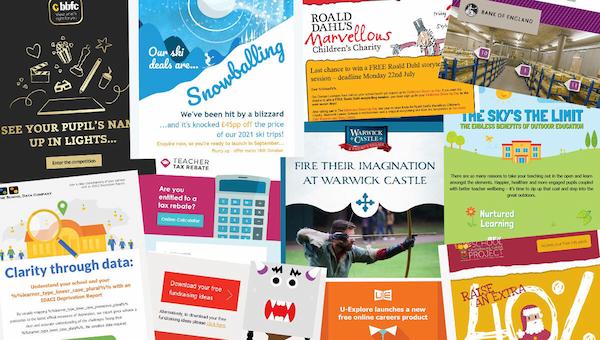



















The Selling to Schools Blueprint for Success
How to Consistently Generate High-Quality Sales Leads from Schools
The Selling to Schools Blueprint for Success
Download as PDF
Download Report Download ReportIntroduction
For years, businesses selling to schools relied on a relatively proven formula for generating consistent engagement and sales throughout the academic year.
Visually designed campaigns would build recognition and credibility inside school inboxes, followed by carefully timed plain-text communication designed to naturally start conversations with school decision-makers. For many education brands, that structure generated reliable leads and steady sales pipelines year after year.
Then, things started to shift.
Education companies that had historically generated strong results from school marketing campaigns were suddenly finding that engagement was becoming harder to sustain, deliverability rates were becoming far less predictable, and strategies that had previously generated consistent momentum throughout the academic year were no longer producing the same volume of meaningful conversations with schools.
Rather than simply increasing campaign volume and hoping results would recover, many businesses turned to Sprint Education to help understand what was changing across school engagement, inbox delivery, pipeline generation, and buying behaviour throughout the education sector.
That process ultimately led to the development of Sprint IQ; an industry-first sales enablement strategy designed specifically for businesses selling to schools.
Now, after analysing Sprint IQ performance across different education brands, products, and school marketing campaigns, the results are starting to reveal something much bigger than stronger engagement alone. The patterns emerging across thousands of school interactions are beginning to paint a much clearer picture of the future of school marketing.
Inside this whitepaper, you’ll:
- Understand why traditional school campaigns have become less predictable over the past few years.
- Explore how Sprint IQ was developed to support stronger long-term engagement with schools.
- Learn how Sprint Education’s sales enablement strategies have generated a level of consistent school lead generation throughout the academic year rarely seen before in the schools sector.
- See what Sprint IQ performance numbers reveal about the future of school sales.
- Discover why more education brands are moving towards “always-on” engagement systems rather than relying heavily on isolated campaign launches alone.
Why traditional marketing to schools became less effective
As more education brands started struggling to maintain consistent engagement and pipeline growth from school marketing campaigns, we invested a huge amount of time into understanding what had actually changed across the education sector.
Many of the businesses coming to Sprint Education for support had previously generated strong results from traditional marketing to schools campaigns for years. But increasingly, those same campaign structures were becoming less reliable, deliverability rates were becoming far less predictable, and strategies that had once created steady momentum throughout the academic year were no longer generating the same volume of meaningful conversations with schools.
These changes became particularly noticeable across academy trusts and MATs, where longer procurement cycles, multiple stakeholders, and growing supplier competition started making relationship-building significantly more important than isolated campaign activity alone. The deeper we analysed school inbox behaviour, buying cycles, deliverability trends, and engagement patterns, the clearer the wider shift became.
Generic outreach damaged engagement quality
Schools weren’t just getting more marketing - but more low-quality emails that bordered on spam.
Over the past few years, there’s been a major rise in generic “education marketing agencies” entering the sector without any real understanding of how school marketing actually works. Many businesses started sending templated outreach at scale using messaging that felt repetitive, impersonal, and commercially shallow, making it much harder for genuinely valuable communication to stand out.
School inbox filtering became far stricter
Spurred on by both developments in technology, and the rise in low-quality marketing, school inbox filtering evolved rapidly.
Email providers and school IT systems became far more aggressive when identifying promotional or potentially low-value outreach. Deliverability itself became far less predictable, with campaigns increasingly going undelivered or landing in junk folders for reasons that would have had very little impact only a few years earlier.
School buying behaviour became more cautious
Budget constrictions, staffing pressures, and growing internal scrutiny around purchasing decisions meant many schools became much slower and more cautious when engaging with suppliers.
Products and services that might once have generated immediate conversations were increasingly entering much longer evaluation periods involving multiple stakeholders and delayed decision-making timelines.
That created a major challenge for businesses relying heavily on short bursts of campaign activity to generate consistent sales pipelines throughout the academic year.
These shifts created a much more difficult environment for businesses relying heavily on traditional marketing to schools campaigns alone. Generating initial visibility was still possible, although maintaining engagement long enough to create a steady sales pipeline throughout the academic year became significantly harder as school buying cycles stretched across longer periods.
The New Era of School Sales
Sales development had always played an important role, but our old recommended approach meant that teachers were highly engaged once conversations began.
As school marketing became harder, that balance started shifting. Campaigns could still create visibility and interest, but sales development emails and calls needed to do far more of the heavy lifting: warming up colder leads, keeping conversations alive for longer, and turning slower engagement into a steady sales pipeline
That shift happened for several reasons, all of which gradually pushed sales development from a supporting role into one of the most commercially important parts of modern marketing to school campaigns.
Relationships started mattering more
As supplier competition increased across the education sector, schools became much more selective about which businesses they engaged with.
School decision-makers were increasingly forming opinions about suppliers long before active buying conversations began, particularly as buying cycles became longer and involved more people internally. Businesses maintaining regular, relevant communication with schools therefore started entering conversations from a much stronger position because familiarity and trust had already been building over time.
Ongoing visibility became more valuable
Historically, many school marketing campaigns focused heavily on launches, events, and key campaign periods throughout the academic year. The challenge is that school buying behaviour rarely follows those neat timelines anymore.
Schools often revisit suppliers weeks or months after first encountering them, particularly when budgets, priorities, or internal pressures change throughout the year. That made consistency far more valuable because businesses maintaining regular visibility stayed familiar to schools long after campaign activity had ended.
Human-style messaging started outperforming corporate outreach
As school inboxes became flooded with poor-quality supplier communication, messaging style started playing a much bigger role in engagement performance.
School decision-makers became far more responsive to messaging that felt conversational, relevant, and useful to the realities of school life. Outreach that sounded heavily scripted, overly corporate, or disconnected from genuine school challenges increasingly struggled to generate meaningful engagement inside much more crowded inboxes.
Ongoing engagement replaced isolated campaigns
Over time, many education brands started changing how they approached marketing to schools.
Rather than treating campaigns as isolated activity, more businesses began building longer-term engagement systems where campaigns, sales development, follow-up communication, inbox delivery strategies, and audience intelligence all worked together throughout the academic year.
That approach helped businesses stay visible across longer buying cycles, maintain familiarity with schools over time, and generate much steadier sales pipelines without overwhelming school decision-makers through excessive campaign activity.
The Five-Step Sprint IQ Blueprint
Step 1: Send from a solid base
One of the biggest discoveries during our research was how heavily sending infrastructure and sending behaviour were now influencing campaign performance inside school inboxes.
Traditional mass-marketing emails still play a hugely important role in school marketing, particularly when it comes to generating visibility, awareness, and large-scale reach across the education sector. The challenge is that school inbox systems have become significantly more aggressive over the past few years, particularly towards activity that appears overly sales development focused within a traditional marketing template.
For Sprint IQ campaigns, we build bespoke, dedicated sending environments for every client, with each one carefully configured and warmed in a specific way to support stronger deliverability rates and reduce the likelihood of emails landing in spam or going undelivered. That approach helps maintain steadier inbox visibility and creates much more natural communication patterns with schools throughout the academic year.
Step 2: More tortoise, less hare
For years, we’ve encouraged clients to avoid the aggressive high-volume sending behaviour that became common across much of the wider email marketing industry.
Long before Sprint IQ launched, we had already seen stronger results from campaigns that were sent more gradually and more carefully, particularly when marketing to schools. Over time though, as school inbox filtering became more advanced, that principle started becoming even more important.
Sending too many emails too quickly, even across a single day, was increasingly affecting inbox placement rates and increasing the likelihood of campaigns landing in spam or going undelivered altogether. As a result, Sprint IQ slows things down even further.
Communication is deployed in much smaller volumes and at much more controlled speeds, allowing engagement to build gradually over time rather than forcing large spikes of activity through school inboxes all at once. Through extensive testing, we identified a much more effective “sweet spot” between sending speed, inbox placement, and long-term engagement behaviour - something that has become one of the biggest contributors to the stronger deliverability, engagement, and response rates Sprint IQ campaigns are now generating.
Step 3: Mimic human behaviour
As more education suppliers entered the market, messaging quality started becoming one of the biggest differentiators in campaign performance.
Many education brands were still sending heavily polished corporate communication that looked professional externally but often felt too generic, overly sales-driven, or disconnected from the day-to-day pressures schools were actually dealing with. Schools became far more responsive to messaging that sounded conversational, relevant, and commercially useful rather than overtly promotional.
Everything from the pacing of communication to the tone, structure, and sequencing of messages inside Sprint IQ is designed to feel significantly more natural and relationship-driven. When combined with traditional marketing activity, this approach starts generating much warmer engagement because schools feel like they're interacting with people rather than simply being marketed to constantly.
Step 4: Cadence is key
Traditional campaign activity still plays a hugely important role in generating visibility and awareness across the education sector. The challenge is that modern school buying cycles often stretch far beyond the lifespan of a single campaign launch.
A school might engage with a supplier today but not actively buy for several months because budgets shift, priorities change, leadership teams delay decisions, or procurement timelines move unexpectedly throughout the academic year. That means many businesses need ways to stay familiar to schools without constantly pushing aggressive sales messaging or overwhelming school decision-makers with excessive follow-up.
Sprint IQ was designed around a much lower-pressure communication cadence that feels closer to how strong sales development works naturally in real life. Rather than repeatedly targeting schools with constant outreach, communication is carefully paced in shorter sequences designed to build familiarity, maintain visibility, and keep conversations moving without becoming a nuisance to busy school decision-makers.
That softer and more controlled cadence has become particularly important as schools receive significantly more supplier communication throughout the academic year. Instead of relying on aggressive persistence, Sprint IQ focuses on staying recognisable, relevant, and commercially useful whenever schools are eventually ready to engage.
Step 5: Forget vanity metrics
Traditional engagement metrics no longer tell an accurate story
Opens and clicks have become significantly less reliable over the past few years due to modern privacy features built into email platforms and devices, to the point where many businesses are now making strategic decisions using increasingly inaccurate data. At the same time, tracked emails can create additional deliverability challenges because of the amount of tracking code embedded into campaigns, with some testing suggesting tracking alone can reduce deliverability by as much as 28%.
Instead, Sprint IQ focuses much more heavily on sustained visibility, stronger inbox placement, warmer engagement, and genuine sales conversations developing gradually over time. Combined with enterprise-level infrastructure enhancements capable of improving delivery rates even further, that shift is one of the main reasons Sprint IQ campaigns are now generating response rates and pipeline growth that would have been extremely difficult to achieve using traditional campaign-led school marketing alone.
The Results Behind Sprint IQ
When Sprint IQ first launched, the objective was relatively simple: determine whether a fundamentally different approach to school marketing could reverse many of the deliverability, engagement, and pipeline challenges businesses selling to schools had started facing across the previous few years.
Now, the results have become increasingly difficult to ignore…
"Sprint IQ has achieved a 2,400% increase in sales leads generated compared with mass marketing campaigns."
More meetings booked in 2 months than the previous 10 months combined
One of the clearest commercial shifts many businesses experienced through Sprint IQ was not simply an increase in engagement volume, but a significant increase in meaningful sales conversations developing throughout the academic year.
One client reported booking more meetings within the first two months of launching Sprint IQ than they had generated across the previous ten months combined using more traditional school marketing structures.
Results like that reinforced how much modern school marketing performance was starting to depend on deliverability, familiarity, pacing, and longer-term engagement rather than simply increasing campaign activity alone
27 enquiries generated in three weeks (after generating just 18 across the previous year)
Some of the strongest Sprint IQ results came from businesses that had previously struggled to maintain consistent sales momentum throughout the academic year.
One client generated 27 enquiries within the first three weeks of launching Sprint IQ after generating only 18 enquiries across the entire previous year using more traditional campaign structures.
Results like that reinforce how much stronger slower-drip engagement systems are becoming at generating long-term school sales pipeline.
"From our audience of only 4,300 school contacts we generated 54 direct sales leads from our campaign. We're so happy!"
Sprint IQ campaigns generate engagement long after launch
As school buying cycles continued slowing down, long-term familiarity started becoming significantly more valuable commercially.
Many Sprint IQ campaigns continue generating replies and conversations long after traditional campaign engagement would historically have started fading, reinforcing the growing importance of ongoing sales development rather than relying purely on short-term launch activity.
Stronger commercial results came from better engagement signals
One of the biggest lessons from Sprint IQ performance is that traditional campaign metrics don’t always show the full commercial picture.
Sprint IQ campaigns don’t track clicks, and we intentionally avoid many tracking-heavy practices because of the impact they can have on deliverability. Instead, we focus on the signals that matter most commercially: stronger open rates, replies, sales conversations, enquiries, and long-term school sales pipeline growth.
Within the first 30 days of a 12-month Sprint IQ campaign...
Performing arts workshop provider
87 responses/leads
Online attainment programme provider
90 responses/leads
Outdoor facilities provider
33 responses/leads
School trips provider
74 responses/leads
Many businesses initially approached Sprint IQ as an additional marketing tactic designed to improve campaign performance. Over time though, clients increasingly started restructuring wider sales strategies around the principles Sprint IQ was proving successful: slower-drip engagement, relationship-led communication, stronger deliverability, and ongoing familiarity building throughout the academic year.
The next 12 months will change who schools buy from...
The past few years have fundamentally changed how businesses need to approach marketing and sales within the education sector.
Across a growing number of school marketing campaigns, the businesses generating the strongest school sales results are increasingly the ones building long-term engagement systems around their campaigns rather than relying purely on isolated marketing activity. Stronger deliverability, slower-drip communication, warmer engagement, and long-term familiarity building are already generating measurable school lead generation and pipeline growth.
While some suppliers continue focusing primarily on launches and short-term campaign spikes, others will spend the next academic year building much stronger familiarity, visibility, and ongoing engagement with the same school decision-makers. By the time many businesses fully recognise how much school engagement behaviour has changed, competitors using longer-term engagement systems may already have spent months - or even years - building trusted visibility and ongoing conversations across the education sector.
Sprint IQ has already spent the past year generating measurable results across real education brands, real campaigns, and real sales pipeline growth, with many early adopters already restructuring wider sales strategies around the principles it has proven successful.
Book a planning session with our team to explore what Sprint IQ could look like for your business, and how the next 12 months of school sales could change if stronger deliverability, warmer engagement, and long-term pipeline growth become part of your wider strategy.
Thank you for reading
Speak to one of our education experts about how we can help today!
Grow your brand with Sprint Education
Grow your brand
Independently manage your marketing to schools with Campus, or opt for an expert-led managed campaign launch.

