



































12 Ways to Write School Case Studies That Actually Generate Enquiries
12 Ways to Write School Case Studies That Actually Generate Enquiries
Turn school success stories into stronger sales assets with 12 ways to write case studies that build trust, prove impact, and drive enquiries.
Turn school success stories into stronger sales assets with 12 ways to write case studies that build trust, prove impact, and drive enquiries.


School case studies should be some of the hardest-working assets in your marketing.
Teachers usually open them because they're already considering whether your organisation could help their school. Questions are swirling around their head before they've even reached the first paragraph: Has another school faced this problem? How did the project actually work? Was the implementation straightforward? Did the promised outcomes materialise? Would another school make the same decision if they had the chance again?
Those questions often go unanswered. Plenty of case studies read more like a project summary than a resource for the next prospective customer, leaving schools to fill in the gaps themselves and work out why the project was successful, how the supplier was chosen, and whether the same approach would work in their own school.
We've read hundreds of school case studies over the years, and the ones that consistently generate enquiries all have remarkably similar characteristics. They remove uncertainty, answer practical questions, and help schools picture themselves achieving the same outcome. Here are twelve ways to make your own case studies do exactly that.
1. Start with the school’s challenge
It’s surprisingly common to read a school case study and reach the second paragraph before finding out why the project happened. The opening talks about the supplier, the partnership, the delivery, and how pleased everyone was, while the school’s original problem sits quietly in the background.
That’s the bit another school is most likely to recognise. Perhaps staff were spending too much time on admin, pupils were struggling with a particular topic, leaders needed better reporting, or a trust wanted a more consistent approach across several schools.
Once the challenge is clear, the rest of the case study has something to hang from. The reader can see why the project mattered, why the school needed help, and why the solution was worth exploring.
2. Be specific about the school
“We worked with a school” gives the reader almost nothing to picture. A one-form-entry primary school, a large secondary academy, an independent prep school, a sixth form college, and a multi-academy trust will all read the same story through a completely different lens.
Details such as phase, size, setting, trust structure, pupil profile, and the type of challenge faced need to be included wherever possible, even if the school has declined to be named.
Those details help another school decide whether the example feels relevant to them. They also show that your organisation understands the education sector properly, rather than treating every school as though it works in exactly the same way.
3. Explain why the school chose you over the alternatives
One of the most useful parts of a case study is the moment the school decided your organisation was the right choice. That decision may have involved comparing competitors, speaking to colleagues, reviewing existing suppliers, or deciding whether to solve the problem internally.
Your case study should explain what tipped the balance. Perhaps implementation looked easier, your support felt stronger, your pricing was clearer, your education experience gave the school more confidence, or your product solved a problem competitors hadn’t properly addressed.
That detail helps future schools understand why someone in a similar position trusted you, while answering the main question behind any supplier evaluation: “Why did they choose this organisation over the other options?”
4. Show what actually changed
“The project was a success” has appeared in thousands of school case studies, and it rarely gives the next school enough to work with. Readers need to understand what success looked like in practice, especially when they’re deciding whether your product or service could create a similar result for them.
That means painting the before and after clearly. If your product helped improve reading levels, the case study needs to explain what reading looked like before the school started working with you. If teachers saved time each week, readers need to understand what was taking that time in the first place, and how much time has been saved. If reporting became clearer, show what was messy, slow, or difficult before, and what the process is like now.
The outcome doesn’t need to be dramatic, as long as it reflects the price schools are paying for your product or service, and it’s specific enough to feel real. A good case study gives schools something concrete to imagine, because when the impact is clear, the story starts doing far more than documenting a happy customer.
5. Include the practical details schools are already wondering about
Teachers rarely finish reading a case study with just one question in mind. As they work through it, they're naturally building a picture of what the project would look like in their own school, and that picture is much easier to form when the practical details are already there.
How many pupils took part? How long did the implementation take? Was staff training included? How much involvement was needed from teachers? Was it delivered in one day or spread across several weeks? Those details might feel fairly ordinary when you've lived through the project yourself, although they're often exactly what another school is hoping to find.
The less detective work a teacher has to do after reading your case study, the more valuable it becomes. Every practical question you've already answered is one less reason for a prospective customer to put off making an enquiry.
6. Include the challenges as well as the successes
Real school projects almost never run in perfect conditions, and that’s exactly why the messy bits can make a case study stronger.
Budgets change, timetables move, staff are absent, rooms become unavailable, technology decides to misbehave, and schools often need suppliers to adapt at short notice. Including those moments gives schools a much clearer picture of what it’s actually like to work with your organisation.
It also demonstrates flexibility, problem-solving, and real education experience in a way that generic claims about “excellent customer service” never really can. Prospective schools know projects aren’t always straightforward, so showing how you handled the less tidy moments often builds just as much confidence as the final outcome.
7. Let the school do some of the talking
A strong quote should sound like something only that school could have said, and not generic statements that could have been pulled from any other case study.
That’s where a lot of testimonials fall flat. “We’d highly recommend them” sounds positive, but you could paste it into almost any case study for almost any supplier, and nobody would notice. It doesn’t tell the next school what the experience was like, what changed, or why the recommendation should mean anything to them.
The best quotes usually come from asking better questions. Instead of asking, “Would you recommend us?”, ask what made the biggest difference, what staff found most useful, what pupils responded to, what surprised them, or what they’d tell another school considering the same decision.
That gives the next school evidence in the customer’s own words, which is exactly what they need when they’re deciding whether to trust yours.
8. Make your case study easy to skim
Teachers don't sit down with a cup of tea intending to read every word of a six-page PDF.
Most will scan headings, look for photographs, read pull quotes, glance over statistics, and jump between sections looking for the information that's most relevant to them. If everything sits in long paragraphs with no obvious structure, there's every chance they'll miss the very point you wanted them to see.
Good case studies are designed around the way people actually read. Clear headings, logical sections, call-out quotes, photographs, and sensible formatting all help schools find the information they're looking for quickly, making it much more likely they'll reach the end with a positive impression of both the project and your organisation.
9. Keep your case studies up to date
A case study from six years ago may still describe a successful project, although it becomes less persuasive when the product, school context, team, curriculum, or wider education landscape has clearly moved on.
Schools want to know that your organisation is still delivering strong results now. It’s fine to leave all of your old case studies published on your website, but if you’re still heavily pushing an old project with outdated education terminology, a school that’s since closed down, or a version of your service that no longer exists, it starts creating questions instead of answering them.
That doesn’t mean every case study needs a full rewrite every year. A sensible refresh is usually about removing anything that makes the story feel dated: publication dates from old case studies you intend to feature in your marketing, old education terminology, outdated screenshots, discontinued product names, or references to initiatives that no longer exist.
10. Match the case study to the audience
One excellent case study won’t persuade every school, because different audiences need different reassurance before they feel ready to enquire.
A primary headteacher, secondary science teacher, school business manager, careers leader, and multi-academy trust contact will all scan a case study with slightly different questions in mind. The story that reassures one audience may feel too distant for another if the school type, challenge, or outcome doesn’t match what they’re dealing with.
That’s why a strong case study library should cover different products, school types, challenges, and implementation journeys. Schools instinctively look for examples that feel familiar, because familiarity reduces uncertainty. The closer your case study mirrors the reader's own circumstances, the easier it becomes for them to picture achieving the same outcome themselves.
11. Use your case studies with purpose
A case study shouldn’t spend most of its life gathering dust on a “case studies” page on your website while your campaigns, proposals, and sales emails try to do all the persuasion by themselves.
Used properly, a case study can strengthen a nurture email, answer an objection during a sales conversation, support a proposal, add credibility to a landing page, or give a school extra confidence after they’ve downloaded a free guide. It can do a lot of heavy lifting, providing it appears where the school actually needs reassurance.
The important bit is matching the right story to the right moment. Sending the same case study to every prospect eventually turns a useful sales asset into another generic attachment, while choosing the most relevant example helps the school feel like you understand their situation before you’ve even spoken.
12. Invest in great photography
A good photograph can answer questions before the first paragraph has even been read, especially when your product or service is physical, visual, pupil-facing, or difficult to picture from copy alone.
Quality matters here. A sharp, well-composed photograph can make the case study feel more credible immediately, while a dark, blurry, awkwardly cropped image can make an excellent project look far less impressive than it really was. In some cases, poor photography will weaken the case study more than having no images at all.
Some suppliers avoid photography because permissions feel difficult to navigate, particularly when pupils are involved. In most cases, pupils don’t need to appear at all. Photos of the installation, resources, room, display, staff setup, or wider school environment can still make the case study feel real and specific.
School branding can add credibility too. If the school approves use of its logo, include it, and make sure that permission covers the marketing materials where you plan to use it. Small details like a school name, logo, recognisable space, or project photograph help reinforce that this was a real piece of work with a real school, which gives the whole case study more weight.
Make your case studies work harder
A strong school case study should make the next prospective customer feel more confident about getting in touch. It should answer the questions prospective schools are already asking, show the before and after clearly, use quotes that actually say something, include practical detail, and make the story easy to skim, share, and believe.
If your current case studies read more like polite project summaries than useful sales assets, they’re probably underselling the work you’ve already done. Strengthening them gives your campaigns, proposals, and sales conversations better proof to work with, helping more schools understand why others chose you and why they should take a closer look too.
If you’d like help turning your school success stories into stronger marketing assets, book an education strategy call with Sprint Education and we’ll help you identify where your case studies could work much harder.
Tags
Marketing to Education
Marketing to Schools
Marketing to Teachers
Similar Articles
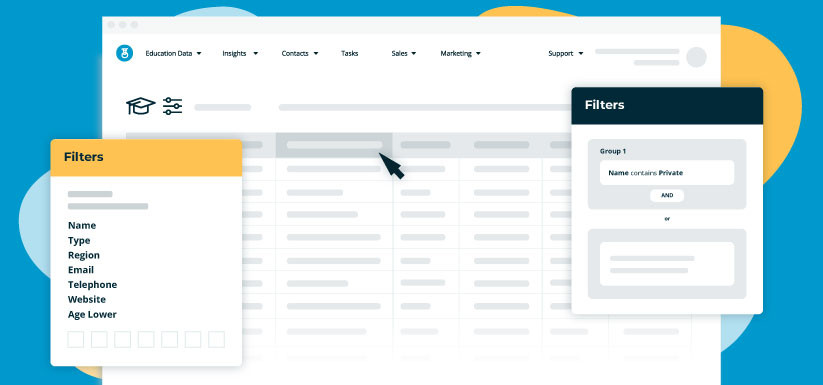
Campus Update: Enhanced List Building for Education Marketing
Targeting schools and teachers in the UK just got simpler, discover our versatile new list builder
Read Post
Following Up On Hot Prospects - Your Engaged Recipients
Target the educators and education staff that matter to your selling-to-schools email campaigns
Read Post