





























Does Postal Marketing Still Work For Schools?
Does Postal Marketing Still Work For Schools?
Does postal marketing to schools still work? Learn how direct mail and personalised postal campaigns combine with email marketing to sell to schools.
Does postal marketing to schools still work? Learn how direct mail and personalised postal campaigns combine with email marketing to sell to schools.


Postal marketing to schools has always had one obvious weakness: compared with email, it’s slower, more expensive and harder to scale quickly. That’s why plenty of education suppliers have pushed it aside in recent years, especially when email marketing can reach thousands of school staff in a matter of minutes.
But speed isn’t the only thing that matters when you’re marketing to schools.
Schools rarely buy from one touchpoint alone. A supplier name appearing once in an inbox is very different from that same name appearing across multiple channels – in emails, in printed materials, on desks, in staff pigeon holes, and in conversations between colleagues.
That’s why postal marketing still has a role in school marketing, especially when it’s used alongside email rather than treated as a replacement for it. Email gives you reach, speed and consistency; direct mail gives you physical visibility, longer shelf life, and a way of putting your name directly into hands and onto desks rather than existing solely inside a digital inbox.
The challenge is that postal marketing to schools becomes expensive far more quickly when the targeting is weak. Print, fulfilment and postage mean there’s far less room for broad “spray and pray” activity, which is why the strongest direct mail campaigns are usually the most targeted ones. The businesses seeing the best results from postal marketing to schools are rarely sending generic leaflets to every school they can find; they’re identifying the right schools, the right staff, the right timing and the right message before anything gets printed in the first place.
Why direct mail can still cut through in schools
Schools still process huge amounts of physical information every day, from letters and printed notices to supplier brochures, curriculum materials and internal documents. In larger schools, colleges and academy trusts, post remains part of the daily rhythm, while staff pigeon holes still act as informal distribution points for letters, brochures and printed materials.
That changes how direct mail behaves once it reaches the school. An email may be opened, skimmed and revisited later, although physical post tends to remain visible for longer because it occupies space inside the school itself. A brochure can sit on a desk for several days, a letter may get passed to another member of staff, and a printed piece can remain inside a department office long after it first arrived.
That longer visibility is one reason direct mail for schools still performs strongly in certain situations, particularly when recognition and familiarity matter across longer buying journeys. It’s also why postal marketing usually works best alongside email rather than separately from it, because schools rarely make decisions immediately after one interaction, especially when multiple stakeholders are involved. A teacher who noticed a printed piece earlier in the week is naturally more likely to recognise the same supplier name later when an email arrives.
Why many school leaflet campaigns fail
A lot of school leaflet campaigns fail because businesses try to send them to far too many schools at once.
The logic sounds sensible initially: print a huge batch, send it nationally, and hope enough schools respond to justify the spend. In reality, broad untargeted campaigns usually struggle because schools receive supplier marketing constantly, which means staff become very good at spotting generic messages immediately.
If the leaflet feels irrelevant to the school, the role, or the problems staff are currently focused on, it’s unlikely to hold attention for very long. Schools respond much more positively when the campaign clearly feels relevant to them.
A leaflet written specifically for safeguarding leads behaves very differently from one aimed vaguely at “teachers”. The same applies to campaigns aimed at SENDCOs, heads of department, school business managers or MAT operations teams. The closer the message reflects the recipient’s actual responsibilities, the stronger the campaign usually performs.
That’s also where accurate education data becomes commercially important. Poor school data becomes expensive quickly in direct mail because every printed item carries fulfilment and postage costs as well. If campaigns are reaching outdated contacts, irrelevant schools or staff who no longer hold the right responsibilities, budget disappears quickly without generating meaningful traction.
Letters vs leaflets: which works better?
Letters and leaflets do different jobs, which is why the strongest school postal campaigns often use both together rather than treating them as separate options. A letter helps create a more personal introduction. It gives the campaign a human voice, makes the communication feel more intentional, and helps prevent the mail-piece feeling like just another faceless supplier leaflet arriving through the school office. That becomes especially important when schools are already receiving huge amounts of generic marketing from education suppliers every term.
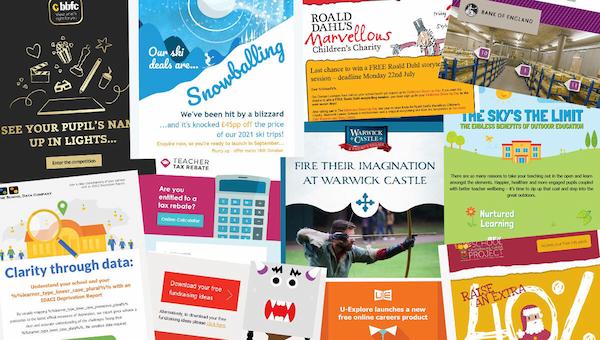
The leaflet or brochure then does a different job. It gives schools something visual to browse properly, helping explain the product or service in more detail while building interest and familiarity over time. School trips, curriculum resources, classroom products, enrichment programmes and wellbeing services often benefit from printed materials that staff can pick up, skim through, share internally and revisit later.
That combination usually works much better than relying entirely on one format alone. The letter creates the personal connection and context, while the leaflet helps educate the school, build excitement around the offer, and visually demonstrate what’s actually being provided.
At Sprint Education’s postal marketing service, businesses can run both traditional direct mail campaigns and more targeted “Pigeon Hole” campaigns designed specifically for schools.
Pigeon Hole campaigns use Sprint Education’s education targeting intelligence to identify schools closely matching the client’s ideal audience before building highly targeted physical campaigns around them. The presentation is designed to feel more personal and less mass-produced, using things like manilla envelopes, hand-fixed stamps and faux handwritten formatting to help the campaign stand out once it reaches the school office.
Schools receive huge amounts of supplier marketing, so generic campaigns get ignored very quickly. Campaigns that feel more relevant and intentional naturally stand a stronger chance of being opened, remembered and passed internally to the right people.
Timing matters more when you’re using post
Timing matters in every school marketing campaign, although postal campaigns leave less room for flexibility once they’ve been printed and dispatched.
An email campaign can be paused, edited or rescheduled quickly if priorities shift, while a postal campaign requires more planning because design, print, fulfilment and delivery all happen before the campaign reaches the school.
That makes the academic calendar especially important. Campaigns arriving during exam periods, the final weeks of term or major inspection windows often struggle because staff attention is focused elsewhere. Campaigns timed around planning periods, budgeting discussions or quieter points in the term usually perform more strongly because schools have greater capacity to engage properly.
Senior leaders, classroom teachers, operations teams and MAT staff also work to slightly different rhythms throughout the academic year, which means the strongest campaign timing often depends heavily on who the campaign is targeting and what problem the product solves.
Why postal and email work best together
One of the biggest mistakes businesses make is treating postal marketing as a separate, sometimes competing channel, when in reality it's part of exactly the same wider strategy.
The strongest school marketing campaigns often use both together across multiple touchpoints. An email may introduce the supplier first, a brochure or letter might arrive at the school shortly afterwards, and personalised follow-up emails can then continue the conversation once the school already recognises the name. In other cases, the postal campaign may land first and help make future emails feel more familiar once they arrive later.
Schools rarely make decisions from one interaction alone. Awareness usually builds gradually through repeated exposure over time, particularly for higher-value products and services involving multiple stakeholders.
A teacher may notice an email briefly, then properly recognise the supplier once a printed piece arrives in their pigeon hole later that week. A school business manager might skim through the brochure first, pass it to another colleague internally, then engage with a follow-up email afterwards once the product or service feels more familiar.
This doesn’t mean you have to start investing heavily in postal marketing. Email marketing remains one of the most effective ways to market to schools, particularly because it’s scalable, measurable, and easy to repeat consistently throughout the academic year.
But in crowded school markets, adding physical mail alongside email can sometimes help suppliers create stronger recognition and stand out more clearly from competitors relying entirely on digital campaigns.
When postal marketing works best
Postal marketing tends to work best when there’s a clear reason for the campaign to exist physically, rather than simply turning an email into print.
The strongest campaigns usually:
- Target specific school roles, establishment types or priority audiences, rather than sending broadly to every school available.
- Use a format that suits the message, whether that’s a letter, leaflet, brochure, prospectus or more personalised Pigeon Hole campaign.
- Align with genuine school planning periods, budgeting windows or operational priorities.
- Support wider school marketing activity across email, sales outreach or brand awareness campaigns.
- Give recipients a simple next step, such as visiting a landing page, booking a call, requesting information or replying directly.
Postal marketing often works well for higher-value education products because decisions usually involve several people inside the school, and printed materials tend to get shared around more naturally between teams. It can also perform strongly when the audience is tightly defined, because sending a carefully produced campaign to a smaller group of right-fit schools is often far more effective than sending a generic leaflet to a much larger audience with minimal targeting behind it.
How to make direct mail to schools worth the cost
Postal marketing costs more than email, which means the planning and targeting need to be sharper from the beginning.
That starts with the audience itself. If the school data is poor, the campaign will struggle before the print even arrives because money is being spent on the wrong schools, wrong roles or outdated contacts.
The creative also needs to justify the channel. A bland flyer that could easily have been an email rarely makes the most of the opportunity, while a strong printed piece can create a much more memorable interaction because it feels useful, relevant or worth keeping.
The follow-up process matters as well. If a postal campaign lands and nothing happens afterwards, much of the value disappears quickly. When email follow-ups, sales activity, and wider campaigns are planned around the direct mail, the physical piece becomes part of a longer journey rather than a standalone send.
Postal marketing often works best as part of a wider marketing to schools strategy that adds visibility, recognition and physical presence alongside digital activity.
Postal marketing still works, when the strategy behind it is strong enough
Direct mail for schools can still perform extremely well, although the campaigns seeing the strongest results usually rely on far more than print and postage alone.
Targeting quality, timing, audience relevance and integration with email marketing all shape whether a campaign earns attention once it reaches the school. Without those things, school leaflet campaigns can become expensive very quickly because every irrelevant send carries a real cost attached to it.
For many education suppliers, postal marketing works best when it complements the rest of their school marketing activity rather than trying to replace it. Email creates consistency and repeat exposure over time, while direct mail helps suppliers put their name physically in front of schools in a way digital channels cannot always achieve on their own.
If you’re considering postal marketing to schools, start with the audience first, then build the format, timing and follow-up process around how those schools are most likely to engage.
You can also book an education strategy call with our team to discuss direct mail for schools, school leaflet campaigns, Pigeon Hole campaigns, and ways to combine postal marketing with email more effectively.
FAQs
Does postal marketing still work for schools?
Yes, postal marketing to schools can still work extremely well when campaigns are targeted carefully, timed properly and integrated with wider school marketing activity.
Is direct mail better than email marketing to schools?
Direct mail and email usually work best together. Email provides reach and consistency, while postal marketing creates physical visibility and recognition inside schools.
Are school leaflet campaigns effective?
School leaflet campaigns can be effective when the audience, message and timing are relevant. Generic mass leaflet campaigns usually perform far less effectively than highly targeted campaigns.
What is the difference between letters and leaflets for school marketing?
Letters often feel more personal and direct, while leaflets and brochures work well for products and services that benefit from visual presentation.
What is Pigeon Hole marketing?
Pigeon Hole is Sprint Education’s targeted postal marketing to schools service, designed to help education suppliers reach focused groups of right-fit schools with more personalised direct mail campaigns.
How can Sprint Education help with postal marketing to schools?
Sprint Education provides fully managed postal marketing to schools, including targeting, creative design, print, packing, posting, Mass Market Mail and Pigeon Hole campaigns.
Tags
Post to UK Schools
Postal Marketing
Postal Marketing Schools
Similar Articles

VIDEO: Selling to Schools Insights - Chapter 2 - Communicating with Schools
We analyse chapter 2 of The State of Selling to Schools 2023, discover how emails compare to social media and postal marketing, how often each is viewed and what leads to the most positive teacher responses.
Read Post
Why Email Marketing Wears the Crown in 2023
Learn why email marketing is the number-one method of generating leads and making more sales with schools (including the must-know statistics for 2023).
Read Post