



































The School Data Accuracy Checklist
The School Data Accuracy Checklist
Read our practical checklist for assessing school data providers, education databases, school contacts, GDPR compliance and data quality.
Read our practical checklist for assessing school data providers, education databases, school contacts, GDPR compliance and data quality.


Most businesses can tell you exactly why they chose their CRM, marketing platform, or email provider. But ask a few questions about their school data provider, and the answers are sometimes unclear or hesitant.
School data providers vary enormously in how they maintain records, monitor staff changes, approach GDPR, and manage the quality of their data. But some providers don’t make that information easily available – even though it can have a significant impact on the performance of your school marketing emails.
Before you renew your school database, or choose which provider you’re going to work with for your back-to-school emails, these questions will help you understand what's happening behind the scenes, and whether the provider you're relying on is maintaining the standards your campaigns deserve.
Data Freshness
1. When was your school data last updated?
One of the quickest ways to separate specialist education data providers from generic marketing agencies is to ask about data maintenance.
Many organisations have entered the education sector over the past few years offering school marketing services and education databases, despite having limited experience of how quickly schools, academies, and MATs actually change. Ask when the data was last updated, how those updates are carried out, and who is responsible for maintaining the records. A provider with genuine education expertise should be able to answer those questions confidently and in detail.
The answer often tells you far more than the size of the database itself. After all, almost anyone can build a database of schools; maintaining accurate school data year after year is where the real challenge begins.
2. How quickly are staff changes reflected in the database?
The education sector experiences constant change throughout the year, although the majority of major staff changes happen over the summer before the autumn term. Staff may take on smaller roles such as anti-bullying coordinator or school trips lead throughout the year, but the summer period sees head teachers retiring, deputy heads stepping into leadership roles, teachers moving schools, and departments restructuring. When all of these happen in quick succession over the summer holidays, the quality of a database can quickly plummet.
If those changes aren't reflected quickly, businesses can find themselves targeting people who no longer work at a school or missing the person now responsible for making a purchasing decision.
A schools database will become outdated far quicker than other B2B sectors – so if your provider’s data is even a year out of date, it could have a huge impact on your campaigns.
3. Does your provider actively monitor school staff movement?
Even though a lot of staff changes happen in September, it’s simply not enough to do a one-off refresh and leave the data untouched throughout the year. As mentioned, staff changes do happen throughout the year, as well as sporadic things such as teachers changing their name or schools changing domain which will make old addresses bounce.
Your provider should be monitoring and addressing bounces and undelivered emails at the bare minimum, but they should also have something in place to regularly monitor for staff and school changes. Providers that do this are far better positioned to maintain accurate records than providers relying on periodic reviews of their database.
4. How many data updates are made each month?
One of the main draws of email marketing is that you can reach a huge number of teachers at a lower cost than other marketing channels. But this is one of those key times when quality will always outweigh quantity, as a small but accurate audience will always outperform a larger, inaccurate one.
At Sprint Education, our education database benefits from more than 600,000 updates every month, supported by a dedicated data team continually checking, cleansing, and verifying records. We have additional ongoing monitoring in place to quickly alert us to staff changes and undelivered emails to make essential updates.
Data Quality
5. How complete are your school records?
No matter which provider you choose, their database should contain the basics: the school’s name, the teacher’s name/email address/job title, maybe the office’s phone number. But a lot of databases don’t go beyond that.
The more complete a record becomes, the more useful it becomes for targeting and segmentation. That’s why Sprint Education identifies secondary job roles such as anti-bullying coordinators and school trip leads, and can filter schools based on a huge number of characteristics including Ofsted ratings, pupil numbers, the number of pupils on free school meals, and much more.
The difference between a basic contact database and a genuinely useful education database is often found in the depth of information attached to each school and decision-maker. Richer records create opportunities for more relevant targeting, stronger personalisation, and ultimately more effective school marketing campaigns.
6. Does your data include central trust and MAT decision-makers?
Academy trusts have been a major part of the education sector for years, so any provider selling school data should already hold MAT and trust-level contacts. If they don’t, that's a huge, concerning gap in their data.
The more important question is whether those central trusts and academies are connected. Some providers will hold records for individual academies and central trusts, but have zero record of which academies are under each trust – essentially just holding two separate lists.
This can be a huge problem because school purchasing decisions often involve stakeholders at both levels. Trust leaders may influence budgets, procurement processes, or supplier approval, while individual schools often retain varying levels of autonomy over the final decision. It’s usually not enough to only email the central trust, or only email the academy – but if a database provider can’t establish the link, you can’t build your send lists.
7. How many bounced emails did your last campaign generate?
Bounced emails are often one of the easiest ways to spot problems with a database. In the education sector, they can happen for all sorts of reasons. There’s the obvious staff changes, but there are the other less-frequent occurrences such as schools changing domain, staff email formats changing, or security settings tightening that prevent certain marketing emails getting through.
A small number of bounces is perfectly normal and expected. What matters more is how your provider responds when they happen. Every bounce should be investigated and fixed right away – not added to a list that only gets dealt with once a month or so, or – even worse – ignored entirely because ‘a small number of bounces is normal’.
8. Can your provider demonstrate the accuracy of its data?
Most school data providers focus heavily on the size of their database. A huge database will sound impressive to those looking to reach as many schools as possible – but quantity doesn’t mean quality, and it’s easy for them to hide poor-quality data underneath headline figures.
Ask for evidence of the accuracy of a provider’s data. Can they explain how data quality is measured? Are they willing to validate a sample of records? Can they demonstrate recent updates or show how accuracy is monitored over time? The strongest providers are usually comfortable discussing those details because they understand that the value of a database isn't determined by how many records it contains, but by how many of those records are genuinely usable.
A database with 100,000+ records only has value if those records are accurate. Otherwise, you're simply paying more for access to a larger collection of bad data.
GDPR and Compliance
9. Can your provider clearly explain its GDPR approach?
Any organisation providing school data should be able to explain how that data is collected, processed, maintained, and managed without relying on vague statements or legal jargon.
When evaluating a school data provider, don't stop at asking whether the database is "GDPR-compliant". Ask what lawful basis they rely on, how educators can manage their communication preferences, how data is kept up to date, and what processes exist for handling data subject requests. A reputable provider should be able to answer those questions clearly and confidently.
The education sector presents unique considerations because databases often contain information relating to millions of educators across schools, academies, and MATs. GDPR covers the entire lifecycle of that data, including how it is collected, maintained, protected, updated, and managed over time. Understanding a provider's approach to those responsibilities should form an important part of any procurement decision.
10. Can your provider explain its lawful basis for processing data?
Many organisations ask whether a database is GDPR compliant without ever discussing the lawful basis that underpins it.
For most education data providers, that conversation will involve legitimate interest. Your provider should be able to explain why they rely on legitimate interest, how that assessment has been carried out, and what safeguards are in place to balance the needs of organisations using the data with the rights of the educators contained within it.
They should also be able to explain how their approach aligns with guidance from the Information Commissioner's Office (ICO), how educators can exercise their rights, and what processes exist to ensure the data continues to be processed responsibly. A clear and confident explanation is often a good indicator that GDPR compliance has been built into the database from the outset rather than added retrospectively.
11. Does your provider offer a preference centre for school staff?
School staff should have clear ways to control how their information is used and what communications they receive.
A preference centre allows educators to do things such as unsubscribe from marketing communications, opt out for a period of time, update their details, or choose the types of information they'd like to receive. While those features might seem simple, they form an important part of responsible data management and help ensure educators remain in control of their own information.
For businesses buying school data, a preference centre can also provide reassurance that the provider is taking transparency seriously and has invested in the systems needed to support educators' rights and preferences over the long term.
Provider Transparency
12. What evidence does your provider share about its data quality?
If you're about to invest in a new CRM, marketing platform, or piece of software, you'd probably expect to see a demo before making a decision. School data should be no different.
Ask what evidence your provider can share. Can they show examples of recent updates? Can they explain how many changes are made to the database each month? Are they willing to verify a sample of records or explain how they measure data quality internally? The answers often reveal far more than headline claims about database size or accuracy.
The strongest providers are usually comfortable having those conversations because they can clearly demonstrate the work taking place behind the scenes to maintain the quality of their data.
13. What questions can your provider answer about its data?
The answer is simple: your provider should be able to answer every single one of them.
If a provider struggles to explain how its data is maintained, how frequently records are updated, how GDPR responsibilities are managed, or how data quality is monitored, that should raise questions about the processes sitting behind the database. In some cases, it may even indicate that the organisation doesn't maintain the data itself and is instead leasing the data from someone else, and possibly charging you twice the price.
You'd expect a CRM provider to understand its software inside and out, and the same principle applies to school data. A provider that genuinely understands and manages its own database should be able to answer detailed questions about every aspect of it, from update volumes and compliance procedures through to academy trust structures and data quality controls.
Conclusion
If your provider can confidently answer all fourteen questions in this checklist, you're probably working with a database that takes quality, compliance, and accuracy seriously. If some of those answers are harder to obtain, your provider might be letting you down – and your marketing campaigns.
If you'd like to learn more about Sprint Education's education database, which contains more than 4.1 million educator and school decision-maker records, or explore Campus, our education database and CRM platform, we'd be happy to show you how both are maintained and how they can support your school marketing activity. Just click here to book an education strategy call with our team.
Tags
Database of Schools
Database of Teachers
Education Data
Education Database
Higher Education Database
Schools Database
Schools Email Database
Teacher Database
UK School Database
Similar Articles
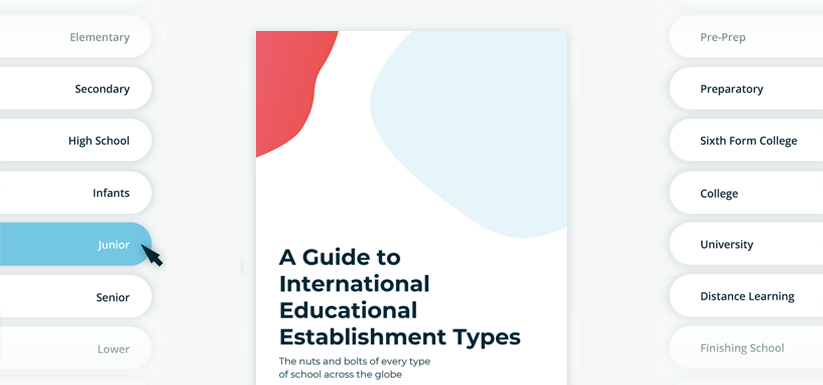
A Guide to International Educational Establishment Types
Learn exactly who you're selling to with your international schools marketing with our breakdown of every educational establishment across the globe.
Read Post
A Who’s Who Guide to MAT Staff
Target your schools marketing with our breakdown of the roles and responsibilities of every MAT decision-maker and influencer in the UK.
Read Post