













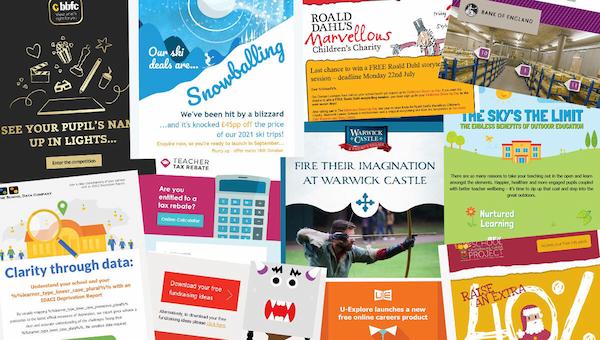
























Should We Use An Education Marketing Agency?
Should We Use An Education Marketing Agency?
Should you use an education marketing agency? How to choose the right agency to market to schools and generate consistent leads.
Should you use an education marketing agency? How to choose the right agency to market to schools and generate consistent leads.



I didn’t start out in marketing. In fact, I was a teacher myself.
I was on the receiving end of all the emails, the brochures, the calls from companies trying to sell into schools. Most of it never landed. A lot of it didn’t even get opened.
It wasn’t because the products were bad. In many cases, they were genuinely useful. The problem was how they were being marketed.
The messaging often felt off. Too polished, too sales-led, or just disconnected from what schools actually care about day to day. Timing was usually wrong as well. Emails would land at the busiest points in the term, or with no real understanding of how decisions were being made within the school. Maybe the companies sending the emails weren’t marketing experts - or maybe they were, but had no education experience.
That’s where the idea for Sprint Education came from.
From the beginning, the focus has been on bridging the gap between running campaigns and understanding how schools and academy trusts operate, how decisions are influenced, and how to get messages seen in the first place.
Since then, we’ve worked on thousands of campaigns and sent millions of emails into school inboxes. Over time, you start to see very clear patterns in what works, what gets ignored, and where most businesses struggle. Which brings me to the question that comes up a lot… “Should we use an education marketing agency?” In my experience, that question usually comes up when something isn’t quite working. Campaigns are running, effort is going in, but results aren’t consistent enough to rely on. And when you break it down, the issue almost always sits in one of a handful of areas.
But first… what does an education marketing agency actually do?
Before deciding whether to use an education marketing agency, it’s important you’re clear on what that agency should be responsible for - because not all agencies are built for this sector.
A general marketing agency might be strong in design, paid ads, or brand campaigns, but marketing to schools requires something far more specific: data, deliverability, messaging, and sector knowledge.
At a minimum, an education marketing agency should be able to:
Provide accurate, up-to-date education data
Reaching the right decision-makers is fundamental. This includes both school-level and trust-level contacts, with regular updates to reflect how quickly roles change in education.
Understand how all school types make decisions
Campaigns need to reflect the reality of shared decision-making across every school type. What works to sell to local authority schools might not work to sell to an independent school, or a multi-academy trust.
Write emails that feel natural in school inboxes
Schools are highly sensitive to tone. Messaging needs to feel human, relevant, and grounded in real challenges, rather than overly polished or sales-led.
Maximise inbox placement
Technical delivery matters. Education-focused sending infrastructure can significantly improve the chances of emails landing in inboxes rather than being filtered out.
Build campaigns that generate responses, not just visibility
The goal is not simply to “get your name out there”, but to generate replies, conversations, and ultimately leads.
This is where specialist agencies stand apart.
For example, Sprint Education’s approach combines access to a large, continuously updated education database, dedicated email infrastructure, and campaign strategies built on data from over 14,000 campaigns.
Without that level of specialisation, it becomes much harder to generate consistent results.
In reality, most businesses don’t have all of that in place at once.
There’s usually one or two areas where things start to break down, and that’s what holds everything else back…
“Our school data is outdated or unreliable”
Data quality underpins everything in marketing to schools.
You can have strong messaging and well-timed campaigns, but if your data is outdated, incomplete, or missing key decision-makers, performance will always be limited.
This is a persistent issue in the education sector. Staff move roles frequently, responsibilities change, and generic data providers struggle to keep pace. Over time, this leads to:
- Lower deliverability.
- Missed decision-makers.
- Reduced campaign reach.
- Wasted spend.
For businesses trying to sell to schools or academy trusts, this creates a ceiling on performance.
Access to high-quality data is one of the biggest differences between average and high-performing campaigns. Platforms built specifically for education can provide visibility across large numbers of contacts, but volume on its own doesn’t guarantee results.
What matters far more is how often that data is updated and how accurately it reflects what’s happening in schools right now.
It’s not uncommon to see large databases marketed as a quick win, but if the data is months or even years out of date, campaign performance will suffer regardless of how many contacts are included. In some cases, repeatedly sending to outdated or invalid contacts can lead to higher bounce rates and spam signals, which increases the risk of your domain being flagged or even blacklisted by school email systems.
That’s why quality should always take priority over quantity.
For example, Sprint Education’s database includes over 1,000,000 educators and decision-makers, with around 600,000 updates made every month to keep pace with changes across the sector.
That level of ongoing maintenance allows campaigns to reach the right people consistently, whether that’s at school level or across academy trusts.
Without it, even well-structured campaigns will struggle to generate reliable results.
“Our targeting is too broad to generate consistent leads”
A lot of marketing to schools still relies on volume.
Large lists, broad messaging, and the assumption that reaching more schools will lead to more enquiries.
In practice, this tends to create visibility without generating consistent leads.
Different roles within schools and MATs have very different priorities. A trust CEO is not looking for the same thing as a head of department in a local authority school, and a finance lead will evaluate decisions differently again.
More effective campaigns are built on precise targeting
- Specific roles within schools and trusts (for example, headteachers, SLT, heads of department, or operational leads).
- Clear distinction between decision-makers and influencers, recognising that both play a role in the buying process.
- Segmentation by school type and structure, including primary, secondary, MATs, and independent schools.
- Targeting by subject area or responsibility, where relevant (for example, maths leads, safeguarding leads, or SENCOs).
- Messaging tailored to each audience, reflecting their priorities and day-to-day challenges.
This is where specialist tools and experience make a difference. Being able to filter and build audiences based on role, school type, and structure allows campaigns to feel far more relevant to the people receiving them.
“Our messaging doesn’t resonate with schools”
Even when campaigns reach the right inboxes, messaging can be the difference between engagement and being ignored.
Schools are exposed to a high volume of marketing, and anything that feels generic or overly promotional is quickly filtered out.
Messaging that performs well in the education sector tends to:
Reflect real pressures within schools
This means understanding what’s actually happening on the ground. Workload, budget constraints, Ofsted pressure, staffing challenges - these all shape how educators evaluate new ideas. Messaging that acknowledges these realities is far more likely to resonate.
Use language that feels familiar to educators
Schools respond better to communication that feels natural and grounded, rather than overly polished or sales-led. Small details in tone and phrasing can make a significant difference to whether an email feels relevant or immediately filtered out.
Focus on outcomes rather than features
Educators are typically more interested in what something will improve, save, or solve, rather than how it works in detail. Clear, practical outcomes tend to drive stronger engagement than feature-heavy messaging.
Be tailored to specific audiences and roles
Messaging should reflect who you’re speaking to. A headteacher, a finance lead, and a classroom teacher will all view the same product differently, so the emphasis needs to shift depending on the audience.
Include relevant personalisation where it adds value
Personalisation works best when it goes beyond simply inserting a name or school. Referencing the right role, context, or challenge makes communication feel more considered and less like a mass campaign.
This is often where generalist agencies struggle. Without a deep understanding of the sector, messaging can feel slightly off, even if it looks polished.
At Sprint Education, this is something we put a lot of focus on. Some of our team are ex-teachers, so we’ve sat on the other side of this and know first-hand what resonates with different teacher types.
“We’re not generating consistent leads from schools”
One of the most common challenges we see is inconsistency.
You might run a campaign that performs well, generates a few enquiries, maybe even a couple of strong leads. Then the next one is quieter. After that, there’s a gap while you regroup, and the whole process starts again.
Over time, it becomes difficult to build any real momentum.
A big part of this comes down to how campaigns are structured.
A lot of school marketing still happens in isolated bursts. A campaign gets planned, sent, and then everything goes quiet until the next push. The problem is that schools rarely make decisions based on a single interaction, especially within academy trusts where multiple people are involved.
What tends to work better is a more consistent presence.
That usually means:
- Regular marketing emails that build awareness over time.
- Follow-ups that feel natural and keep conversations moving.
- Staying visible in school inboxes rather than appearing once and disappearing.
When this is in place, campaigns stop feeling like one-off attempts and start contributing to a steady pipeline of interest.
“Our email campaigns aren’t generating enough responses”
For many businesses, this is the clearest signal that something needs to change.
Campaigns are being sent, but responses are low. Opens might look fine on the surface, but actual enquiries, meetings, and leads are limited. Across the sector, this trend has become more pronounced.
Direct leads from traditional marketing campaigns have fallen by around 45% in recent years, particularly where campaigns rely on broad, one-off activity. At the same time, more targeted, human-style campaigns are performing far more strongly.
Consistent campaigns built around this approach are generating response rates of around 1.6%, equating to roughly 16 responses per 1,000 contacts, with a significant proportion classified as warm or hot leads.
That level of performance is typically driven by:
- More precise targeting.
- Messaging that feels natural and relevant.
- Campaigns that maintain visibility over time.
This is also where having the right structure and delivery model makes a difference.
At Sprint Education, this is the thinking behind how we approach campaign execution. Rather than relying on standalone sends, campaigns are designed to combine wider-reaching marketing emails with more conversational, follow-up style communication that encourages replies.
That shift towards more human, consistent engagement is what tends to drive stronger response rates.
How to sell to schools more effectively with the right support
Results in the education sector are shaped by a combination of data quality, targeting, messaging, and campaign execution. When one or more of those areas isn’t quite right, it becomes difficult to generate consistent leads from schools.
That’s usually the point where working with an education marketing agency starts to make sense.
The value comes from fixing the areas that are holding performance back and building a more structured, reliable approach to marketing to schools and academy trusts.
Book an education strategy call with our team to map out how to improve your targeting, strengthen your campaigns, and generate more consistent leads.
FAQs
Is it better to run school marketing in-house or use an agency?
It depends on your internal resource and expertise. Many businesses use an agency to bring specialist knowledge, better data, and a more structured approach to generating leads from schools.
How do I choose the right education marketing agency?
Look for an agency that specialises in marketing to schools, not just general marketing. They should have access to education data, understand how schools make decisions, and be able to show proven lead generation results.
What questions should I ask an education marketing agency?
Ask how they source and update their data, how they improve inbox placement, what response rates they typically achieve, and how they structure campaigns to generate leads rather than just visibility.
Can I use a general marketing agency to sell to schools?
Results are often limited. Schools behave very differently to other sectors, so agencies without education experience can struggle with targeting, messaging, and getting emails seen.
What does a good education marketing agency actually deliver?
A strong agency should improve your data quality, targeting, messaging, and campaign execution. The focus should be on generating consistent leads, not just sending campaigns.
Why are my current marketing campaigns to schools not working?
Common reasons include outdated data, broad targeting, generic messaging, inconsistent campaigns, and low inbox placement. Fixing these areas usually leads to better results.
Tags
Selling to Schools
Similar Articles

Expert Tips on School Sales Success Before the New Year
Video insights on standing out this November and December from our education marketing team
Read Post
State of Selling to Schools 2022 (Part 1)
Explore insights into schools’ problems and their priorities for the year ahead.
Read Post