






































Why “Helpful” School Marketing Often Feels Fake
Why “Helpful” School Marketing Often Feels Fake
Why “helpful” school marketing often feels fake - and what schools actually want from suppliers trying to sell to schools.
Why “helpful” school marketing often feels fake - and what schools actually want from suppliers trying to sell to schools.


Schools receive a huge amount of marketing every week, much of it positioned as “helpful”, “supportive”, or “designed to add value”. Free guides, downloadable resources, practical tips, thought leadership pieces, and webinar invitations all arrive in inboxes claiming to exist purely to help schools solve problems or reduce pressure.
A lot of this content sounds helpful initially, although it quickly becomes obvious when the real goal is pushing the reader towards a product or demo.
Schools already have limited time and attention, which makes this kind of marketing easier to spot than many companies realise. Staff don't have the capacity to engage deeply with every supplier claiming to provide value, so they become highly selective about what they engage with, particularly when something feels forced, overly strategic, or engineered purely to generate leads.
The companies that tend to perform best are usually the ones producing marketing schools actually want to engage with. Their emails still explain what they do, still link through to their website, and still create commercial opportunities, although they do so in a way that feels useful first and transactional second.
1. Schools Can Tell When a “Resource” Is Really a Sales Pitch
One of the biggest reasons school marketing feels inauthentic is because the “helpful content” often exists purely as a wrapper around a sales message. Schools open a guide expecting practical insight, only to find a lightly disguised brochure filled with product mentions, vague advice, and repeated prompts to book a demo.
This happens constantly across the sector. A resource might be titled “The Ultimate Guide to Student Engagement”, although after a few paragraphs it becomes obvious that the entire document exists mainly to funnel readers towards a platform or service.
There's nothing wrong with creating marketing content that supports commercial goals, because every supplier needs visibility and enquiries. Schools understand that too, although they become sceptical very quickly when a “free resource” turns out to be little more than a sales document.
Schools are far more likely to engage with resources that feel complete on their own, where the reader can take practical value from the content without feeling pushed towards the next step.
2. A Lot of “Helpful” Content Isn’t Actually Useful
A lot of “helpful” marketing fails because it focuses on what the supplier wants schools to care about, rather than what schools genuinely need at that moment in time.
The content schools engage with most usually has an immediate, obvious use. It saves time, reduces workload, simplifies decision-making, or helps staff solve a problem quickly without requiring significant effort to implement.
That’s very different from broad thought leadership pieces filled with generic trends or abstract advice. Schools rarely need more noise, particularly when they're already balancing staffing pressures, safeguarding responsibilities, budgets, inspections, outcomes, and workload concerns.
The suppliers that consistently perform well usually create content that reflects the kinds of pressures and priorities schools are actually dealing with day to day.
- Share ready-to-use resources that staff can apply immediately.
- Provide practical ideas linked to current school pressures or priorities.
- Create guidance that reduces workload instead of adding to it.
A company providing a post-exam activity pack, for example, is often delivering far more immediate value than one sharing a lengthy “future of education” report. Both may contain useful information, although one feels far more relevant to the day-to-day reality schools are dealing with.
3. Marketing Often Ignores What Schools Are Dealing With
Even genuinely useful content can perform poorly if the timing, tone, or delivery ignores what schools are experiencing at that moment.
A supplier sending a heavily promotional campaign during exam season may technically be offering something valuable, although the message can still feel disconnected from the pressures schools are under right now. Workload, staff fatigue, safeguarding pressures, inspections, recruitment challenges, and budget concerns all influence how schools engage with marketing.
An email promoting a new service without acknowledging the current environment can easily feel poorly timed, whereas positioning it as something to revisit after exams feels far more thoughtful and relevant.
This is partly why generic campaigns tend to struggle in the education sector. Schools aren't static environments, and the factors influencing engagement in September are often completely different from those shaping behaviour in May or July. Messaging that reflects those shifts usually performs far better than messaging that stays identical all year round.
4. Too Many Emails Are Designed Entirely Around Conversion
A lot of school marketing becomes overly transactional, particularly when every email, guide, or resource is built around pushing the recipient towards a demo, sales call, or enquiry form as quickly as possible.
Of course, there's nothing wrong with explaining who you are, linking to your website, or making it easy for schools to learn more about your services. Schools expect that. Problems start when the entire interaction feels engineered purely to create a lead, because that intention becomes obvious very quickly.
A genuinely useful email allows the recipient to stay in control. They can read the resource, take value from it, and decide for themselves whether they want to explore further. That creates a very different experience from content where every paragraph feels like it is nudging them towards a conversion.
Schools are far more likely to engage with suppliers who appear confident enough to be useful first, rather than treating every interaction as a backdoor sales opportunity.
5. Over-Engineered Marketing Feels Less Human
The tone of a piece of marketing often determines whether it feels authentic or performative. Schools are exposed to a huge amount of polished, over-engineered communication, much of which sounds corporate, generic, or detached from how real people actually speak.
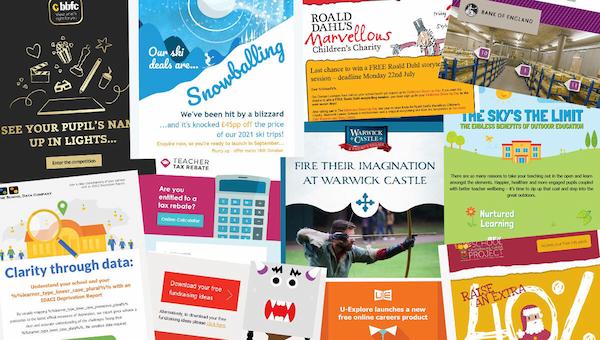
This is particularly noticeable in email marketing, where heavily designed campaigns filled with slogans, stock phrases, and artificial enthusiasm often feel less trustworthy than simpler, more conversational messaging.
More conversational communication tends to perform better because it feels more direct and believable. Specific examples, clear language, and natural phrasing create a much stronger sense that there are real people behind the message, rather than an automated campaign trying to manufacture engagement.
This is also why more conversational campaigns, like those used within Sprint IQ, consistently generate stronger engagement than traditional broadcast-style school marketing. When emails look and read more like genuine communication, schools are far more likely to engage with them.
6. Schools Build Trust More Slowly Than Most Companies Expect
One of the biggest mistakes companies make when marketing to schools is judging every piece of content purely on immediate conversion performance. Open rates, clicks, enquiries, and demo requests all matter, although schools rarely build trust with suppliers after a single interaction, particularly when budgets are tight and buying decisions carry greater scrutiny.
Genuinely useful marketing often works more gradually. A school may read several emails before clicking through to a website, download a resource without replying, or simply become more familiar with a supplier over time before eventually making contact months later.
Over time, suppliers who consistently provide relevant, thoughtful, and genuinely useful communication tend to build far stronger relationships with schools than those focused entirely on short-term lead generation.
Schools Know the Difference
Schools are exceptionally good at recognising when marketing is genuinely useful and when it is simply pretending to be. The difference is not whether a supplier includes links, explains their services, or hopes to generate enquiries; schools understand that businesses need to market themselves.
Schools respond far better when communication feels useful in its own right, rather than carefully engineered to drive a conversion. Timing matters, tone matters, and so does whether the recipient feels respected rather than managed through a funnel.
The companies that tend to perform best are usually the ones producing marketing schools actually want to engage with: communication that feels relevant, human, and genuinely valuable to the people receiving it.
Want help putting together resources that are genuinely helpful, and will start your school relationships off on the right foot? Book an education strategy call with our team and we'll help you build messaging that schools actually want to engage with.
Tags
Marketing Strategy
Marketing to Education
Marketing to Schools
Marketing to Teachers
Similar Articles

Essential Education Marketing Hotspots | February and March
Transform your education marketing approach with our round-up of important school events this February and March.
Read Post
14 Ways to Increase your Click-to-Open Rate
In this article, we’re going to look at the 14 most important actions you need to take with your next email design to improve your click-to-open rate.
Read Post