




































What Data Do I Need to Market to Schools Effectively?
What Data Do I Need to Market to Schools Effectively?
Struggling with school marketing data? Learn what you actually need to reach the right schools and improve results.
Struggling with school marketing data? Learn what you actually need to reach the right schools and improve results.



You can get a lot wrong in school marketing and still get some traction. Messaging can be refined, campaigns can be adjusted, timing can improve over time. But your data doesn’t give you that same flexibility.
When the data is slightly off, everything built on top of it becomes harder work. Messages land with the wrong people, relevance drops before the email is even opened, and results start to feel inconsistent without a clear reason why. It quietly shapes how every campaign performs, which is why it tends to be one of the biggest factors behind whether things feel like they’re working or not.
Getting clear on what data you actually need makes a noticeable difference. It influences who you reach, how your message lands, and whether campaigns feel like they’re building momentum or constantly starting from scratch.
Start with who you’re actually trying to reach
In schools, “the school” isn’t a useful target on its own. Decisions sit with people, and those people have very different responsibilities depending on their role.
A subject lead is looking at something very different to a business manager. A SENCO is focused on a different set of priorities to a classroom teacher. Even within senior leadership, responsibility is often split across multiple areas, which means no single message will naturally fit everyone in the same way.
If the data you’re working with doesn’t reflect that, campaigns end up carrying extra weight. The reader has to figure out whether the message applies to them before they can engage with it, and that’s often where interest drops away.
When roles are clearly defined within the data you’re given access to, that step disappears. The message reaches someone who can immediately see where it fits, which makes everything that follows feel more straightforward.
Segment your audience properly
Schools vary quite a bit depending on their phase, their structure, and whether they sit within a trust. Those differences shape how decisions are made, what priorities look like, and how quickly something can move forward.
In an ideal setup, campaigns are shaped around those differences so the message can speak more directly to each group. That isn’t always practical in every situation, although having the option to segment in that way still matters, because it gives you more control over how specific your messaging can be when the opportunity is there.
Where that structure exists within the data, campaigns tend to feel more relevant and easier to engage with, even if you’re not always splitting everything out in practice.
Accept how quickly school data changes
School data doesn’t stay still for long, and that’s one of the main reasons performance can shift over time.
Staff move schools, take on new responsibilities, step into different roles, or stop overseeing areas they previously managed. The start of a new academic year can bring a large number of changes in a short space of time, and smaller shifts continue throughout the year.
That means data can drift out of alignment without it being immediately obvious. On the surface, everything can still look usable, although the connection between the contact and their current responsibilities may have changed.
This is why the way a provider maintains and reviews their data matters so much. Regular updates and ongoing monitoring help keep things aligned with how schools actually operate, which has a direct impact on how campaigns land.
Why job roles matter more than school names
Schools don’t follow a single, consistent structure, and that’s where a lot of datasets start to lose accuracy.
Job titles vary, responsibilities overlap, and the same role can look slightly different depending on the school. Multi-academy trusts introduce another layer, with some decisions handled centrally and others sitting within individual schools, which changes who needs to be involved at different stages.
If the data smooths over those differences too much, it becomes harder to target campaigns in a way that reflects how decisions are actually made. Messages may still reach valid contacts, although the alignment with responsibility isn’t always strong enough to drive engagement.
This is often where non-specialist datasets struggle. They include schools as part of a wider list, although they don’t capture the detail needed to reflect how roles and responsibilities work in practice, which limits how precise campaigns can be.
Run your campaigns in one place
For some teams, accurate data is the starting point. For others, the real advantage comes from having that data inside a system built specifically for marketing and selling to schools.
Campus is a purpose-built education CRM and outreach platform that brings together the database, audience building, email creation, personalisation, and campaign activity in one place. Rather than exporting contacts and stitching everything together across separate tools, it gives you a single setup designed around how school marketing actually works, with role-based targeting, 91+ filters, an easy-to-use email builder, and 80+ education-specific merge tags.
It makes it easier to build precise audiences and create and send campaigns without jumping between systems, which frees up more time to focus on the campaigns themselves rather than the process around them.
Questions to ask your data provider or agency
If you’re relying on a third party for your data, the focus shifts towards understanding what sits behind it and how it’s being used.
- Ask how the data is sourced and maintained, so you know whether it’s actively updated or based on static lists that are rarely reviewed.
- Check how regularly updates take place and what that process involves, as ongoing maintenance is key in a sector where roles change frequently.
- Look at the level of role detail available, including how clearly responsibilities are defined within the dataset.
- Understand how segmentation works, and whether campaigns can be shaped around meaningful groups when needed.
- Pay attention to engagement patterns, because inconsistent results often point back to gaps in relevance or targeting.
These checks give a clearer picture of whether the data behind your campaigns is helping things move forward or making them harder to build on.
What this means for your results
Good school marketing data shows up in how your campaigns behave. When it’s right, messages land with people who recognise the relevance straight away, which makes conversations easier to start and much easier to keep moving. You’re not trying to force interest or explain why something matters, because that connection is already there.
When that alignment isn’t quite in place, everything feels heavier than it should. Campaigns take more effort to get going, replies are less consistent, and it’s harder to tell what’s working because the starting point keeps shifting.
If you want to see what stronger, better-targeted data actually looks like in practice, book an education strategy call with our team and we’ll show you how our data and tools can help your campaigns land with the right schools more consistently.
Tags
Database of Schools
Database of Teachers
Education Data
Education Database
Higher Education Database
Schools Database
Schools Email Database
Teacher Database
UK School Database
Similar Articles
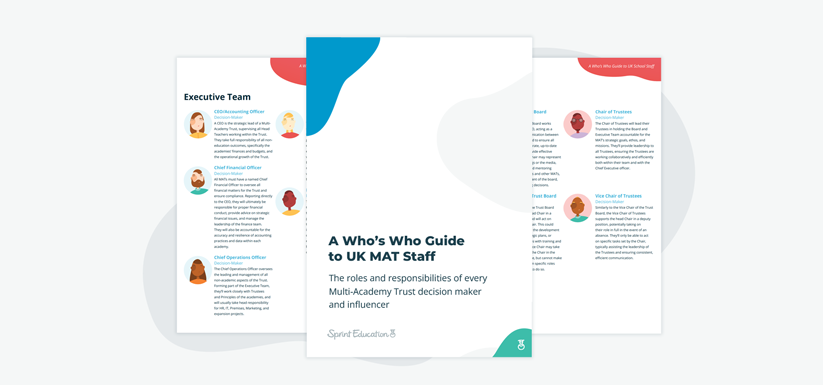
A Who’s Who Guide to MAT Staff
Target your schools marketing with our breakdown of the roles and responsibilities of every MAT decision-maker and influencer in the UK.
Read Post
VIDEO: Selling to Schools Insights - Chapter 2 - Communicating with Schools
We analyse chapter 2 of The State of Selling to Schools 2023, discover how emails compare to social media and postal marketing, how often each is viewed and what leads to the most positive teacher responses.
Read Post