







































7 Myths About Selling to Schools (That Cost Companies Thousands)
7 Myths About Selling to Schools (That Cost Companies Thousands)
Discover seven costly myths about selling to schools and learn how better data, targeting, timing and campaigns can improve results.
Discover seven costly myths about selling to schools and learn how better data, targeting, timing and campaigns can improve results.



Spend enough time talking to businesses that sell to schools and you'll start hearing the same bits of misinformation repeated over and over again.
Schools don't have any money. Teachers never read emails. Everything has to go through the headteacher. Once you've tried schools once, you'll know whether they're the right market for your business.
There's usually a grain of truth behind every one of those statements, which is exactly why they've survived for so long. Schools do have stretched budgets. Teachers are busy. Buying decisions can take time. School inboxes are crowded. The problem starts when those get taken to the extreme - the ‘schools have no money’ level of panic that become sweeping rules that shape your entire sales and marketing strategy.
Over time, those myths can become surprisingly expensive. They lead businesses towards the wrong audiences, the wrong messaging, poor-quality data, abandoned campaigns, and decisions based on myths rather than how schools actually buy.
Let's break down seven of the biggest…
Myth 1: “Schools don’t have any money”
This is probably the most expensive myth in education marketing, because it makes businesses give up before they’ve understood how school spending actually works.
Schools have budgets, suppliers win contracts, and education organisations buy products and services throughout the year. The issue is that school budgets are under pressure, which means purchases usually need to be easier to justify, better timed, and more clearly linked to a priority the school already cares about.
That might be reducing workload, improving outcomes, meeting a statutory requirement, supporting safeguarding, strengthening SEND provision, improving attendance, saving money elsewhere, or solving a problem that’s been annoying staff for months. If your campaign simply says “we’re great” and expects schools to create the business case themselves, the sale can feel impossible to win.
Timing matters too, because the same product can land very differently depending on when schools are planning, reviewing provision, discussing budgets, or trying to solve a problem that has suddenly become more urgent. A disappointing campaign doesn’t always mean there was no money available; sometimes it means the message didn’t give schools a strong enough reason to spend it with you.
Myth 2: “Headteachers make every buying decision”
Headteachers are important, but treating them as the default route into every school can waste a huge amount of campaign spend.
Depending on what you sell, the first person who cares might be a classroom teacher, head of department, SENDCO, school business manager, IT manager, careers lead, safeguarding lead, trust contact, or somebody else entirely. That person may not sign the purchase order, but they can still start the conversation, recommend the supplier, block the idea, or become the reason it reaches the right decision-maker.
This is where a lot of campaigns quietly go wrong. A company sells a product that would mainly interest subject leads, sends everything to headteachers, gets poor engagement, then decides schools aren’t interested. The offer may have been perfectly strong, but it never reached the person most likely to care.
Good school marketing starts by asking who discovers the product, who influences the decision, who controls the budget, and who needs to feel confident before anything moves forward. Those people aren’t always sitting in the same office, and they definitely aren’t always wearing the same job title.
Myth 3: “If schools need us, they’ll find us”
Plenty of brilliant education suppliers are far too quiet for their own good.
They build strong products, collect lovely testimonials, run excellent demos, and then rely on schools somehow finding them at exactly the right moment. Meanwhile, a competitor with a less impressive offer keeps showing up in inboxes, search results, events, and follow-up conversations, making themselves familiar long before the school is ready to buy.
Schools can only buy from suppliers they know exist, and familiarity plays a bigger role in school purchasing than many companies realise. A teacher may open your email, recognise your name from a previous campaign, visit your website weeks later, mention you in a meeting, then come back months afterwards when the timing, budget, or need lines up.
Looking at that enquiry in isolation can be misleading, because it rarely belongs to one single touchpoint. It may have been built through repeated exposure, useful content, consistent campaigns, and the quiet confidence that comes from seeing the same supplier appear in relevant places more than once.
Visibility doesn’t guarantee instant sales, but invisibility makes everything harder. If schools only hear from you once or twice a year, you’re relying on perfect timing, perfect memory, and a level of attention most educators simply don’t have spare.
Myth 4: “We just need a list of schools”
Thinking every schools database contains roughly the same data is a huge mistake. Two providers might both sell an “education database”, but the quality, accuracy, segmentation, maintenance, and sector knowledge behind those records can be completely different.
A company might therefore pick the cheapest list, or the biggest number of contacts, or a giant spreadsheet that looks impressive in a sales meeting. Suddenly, you have thousands of schools to email, which feels like the hard part is done.
But then the campaign goes out. The bounces creep in, the audience doesn’t quite match the offer, the job roles are too broad, and the data doesn’t include the details you actually needed to build a proper strategy.
A useful school data provider needs to help you understand who to contact, how to group them, and why they’re likely to care. That might mean segmenting by phase, region, establishment type, trust relationship, Ofsted rating, pupil numbers, percentage of pupils eligible for free school meals, job role, buying influence, or other characteristics that general B2B data providers often wouldn’t know to look for.
That extra context is where education-specific data becomes valuable. If you’re selling a safeguarding product, an enrichment workshop, a finance system, a curriculum resource, or a MAT-wide service, the “best” audience won’t simply be the biggest on - but the one carefully built around how schools actually buy.
At Sprint Education, our education database contains more than 4 million education contacts, supported by around 600,000 updates every month. Those updates keep records up to date, and combine accurate data with education-sector expertise, helping organisations avoid expensive guesswork when they’re building school marketing campaigns.
Myth 5: "One campaign tells you whether schools are interested"
This myth might have killed more school marketing strategies than any other on the list.
Very occasionally, one email is all it takes to generate a ton of enquiries and even sales. But it’s not common, although businesses understandably become disappointed when they send one email, wait for a flood of enquiries, don’t get the response it hoped for, and decide selling to schools simply doesn't work. The campaign is quietly written off, the budget moves somewhere else, and the product never gets another chance in education.
Schools are making decisions while balancing budgets, inspections, staffing, curriculum changes, safeguarding, parents, and everything else that comes with running a school. Even when your product lands in front of exactly the right person, there's no guarantee they'll be in a position to enquire that week. They may need to discuss it with colleagues, wait for budgets to be reviewed, or simply park the idea until it becomes more relevant.
There's another factor that's easy to overlook as well. Very few organisations become familiar after one email.
Think about the suppliers you buy from yourself. Most weren't discovered and trusted within a single afternoon. You probably came across them several times before you eventually bought, and schools behave in much the same way. One campaign introduces your organisation, another reminds schools you exist, a case study builds confidence, and over time your name becomes familiar enough that teachers recognise it when the right opportunity appears.
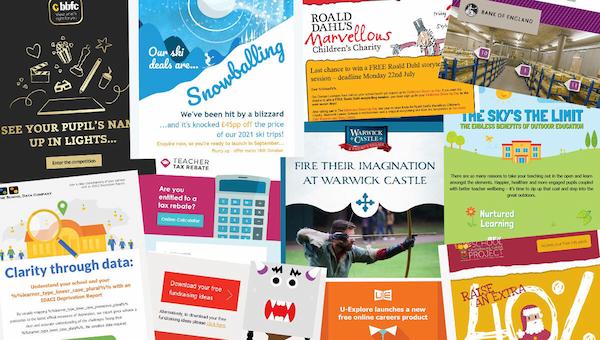
That's why experienced education marketers plan multi-phase campaigns, and not pinning all of their hopes on one email. Every phase teaches them something about the audience, strengthens recognition of their organisation, and creates another opportunity to appear when schools are much closer to making a decision.
Myth 6: "Schools hate marketing emails"
Schools receive tons of emails every day, so it’s easy to assume they must hate them all.
But what’s really the issue is the hoard of bad emails: emails that aren’t relevant to their job role, talk endlessly about the company sending them and not the benefits for the school, are poorly written and designed, look like a brochure has been pasted into an inbox, or ask for a meeting before giving anyone a reason to care.
Those emails exist, schools receive plenty of them, and they’ve done a fantastic job of damaging the reputation of school marketing as a whole.
A good school marketing email has a much better chance because it respects the reader’s time and gets straight to the point of what the product or service can do for the school. It reaches the right person, explains the point quickly, looks easy to read, arrives at a sensible time, and gives the recipient a useful next step instead of making them work to understand why they’ve received it.
That might come from a sharper subject line, better timing, cleaner design, stronger copy, more accurate targeting, clearer proof, or a much easier next step. A relevant email can still underperform if it’s cluttered, confusing, badly timed, or sent using poor-quality data, so the whole campaign needs to be high-quality rather than relying on just one good point.
Blaming the channel too quickly can stop businesses fixing the parts of the campaign that were actually costing them enquiries. If the conclusion is “schools hate emails”, the next campaign usually repeats the same mistakes elsewhere, whether that’s through a different channel, a different audience, or a different offer.
Myth 7: "Selling to schools is just like selling to any other business"
Businesses that are new to education often bring across the sales and marketing strategies that have worked everywhere else, expecting schools to follow much the same buying journey. Sometimes that works well enough, although it's rarely long before the differences start appearing.
Schools don't make purchasing decisions in quite the same way as many other B2B industries organisations. Spends are planned cyclically around budget releases and the academic year, and there tends to be a lot more influencers and decision-makers involved in buying decisions before anything can be approved. The person who discovers your product may not control the budget, while the person signing the purchase order may never have read your email.
There’s another huge consideration: school purchases will directly affect children’s education. It sounds drastic, but a single product or service has the ability to shape a child’s future - either for the better, or for the worse. Choosing the wrong product has drastic consequences, so purchasing decisions are carefully thought out and thoroughly vetted - and that’s without considering the impact on staff, safeguarding, workloads, budgets, or other parts of school life. Trust needs to be built, colleagues often need to be consulted, and decisions that might take a few days elsewhere can sometimes take weeks or months in education.
Schools aren’t difficult to sell to, but they do buy differently. The businesses that perform best in education usually recognise those differences early, then plan campaigns around the school year, target the people most likely to influence the decision, build familiarity over several touchpoints, and create marketing that reflects how schools actually evaluate new suppliers.
Stop letting myths shape your school marketing
Myths about selling to schools become expensive when they start making decisions for you. They push businesses towards cheap data, broad campaigns, abandoned follow-up activity, badly timed emails, and assumptions about budgets or decision-makers that don’t reflect how schools actually buy.
Stronger school marketing usually comes from accurate education data, relevant audiences, realistic buying journeys, and enough familiarity for schools to recognise you when the need appears.
If you’re planning to sell to schools, or your current campaigns aren’t generating the enquiries you expected, book an education strategy call with Sprint Education and we’ll help you identify where the real opportunities are.
Tags
How to Sell to Schools
How to Sell to Teachers
Selling to Schools
Selling to Teachers
Similar Articles
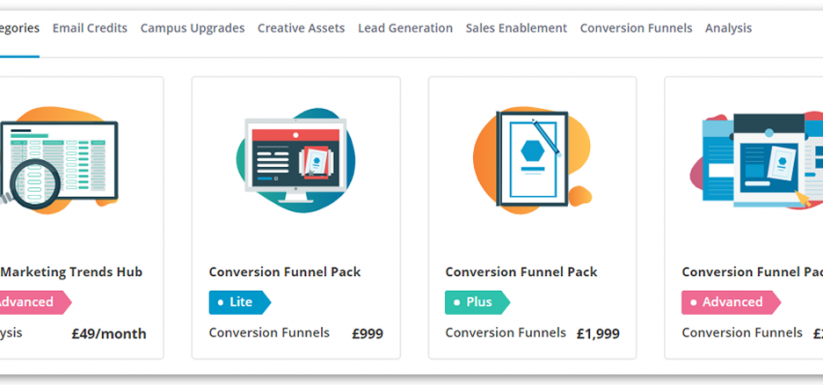
Campus Marketplace: VIP Access to Our Edu-Marketing Experts
Introducing Marketplace. Giving Campus users one-click access to the UK's foremost education marketing content specialists.
Read Post
What's the Best Way to Market to Schools?
How to market to schools effectively with better targeting, role-based campaigns, and consistent email marketing.
Read Post